
Five parts. One commitment.
SeniorVision is a hardware-and-software system installed in the facility's own building, using its own power, on its own network. It does its work locally and produces a record of care that is verifiable, auditable, and free of imagery.
What follows is the system, part by part, in the order you would meet it walking into a deployed facility.
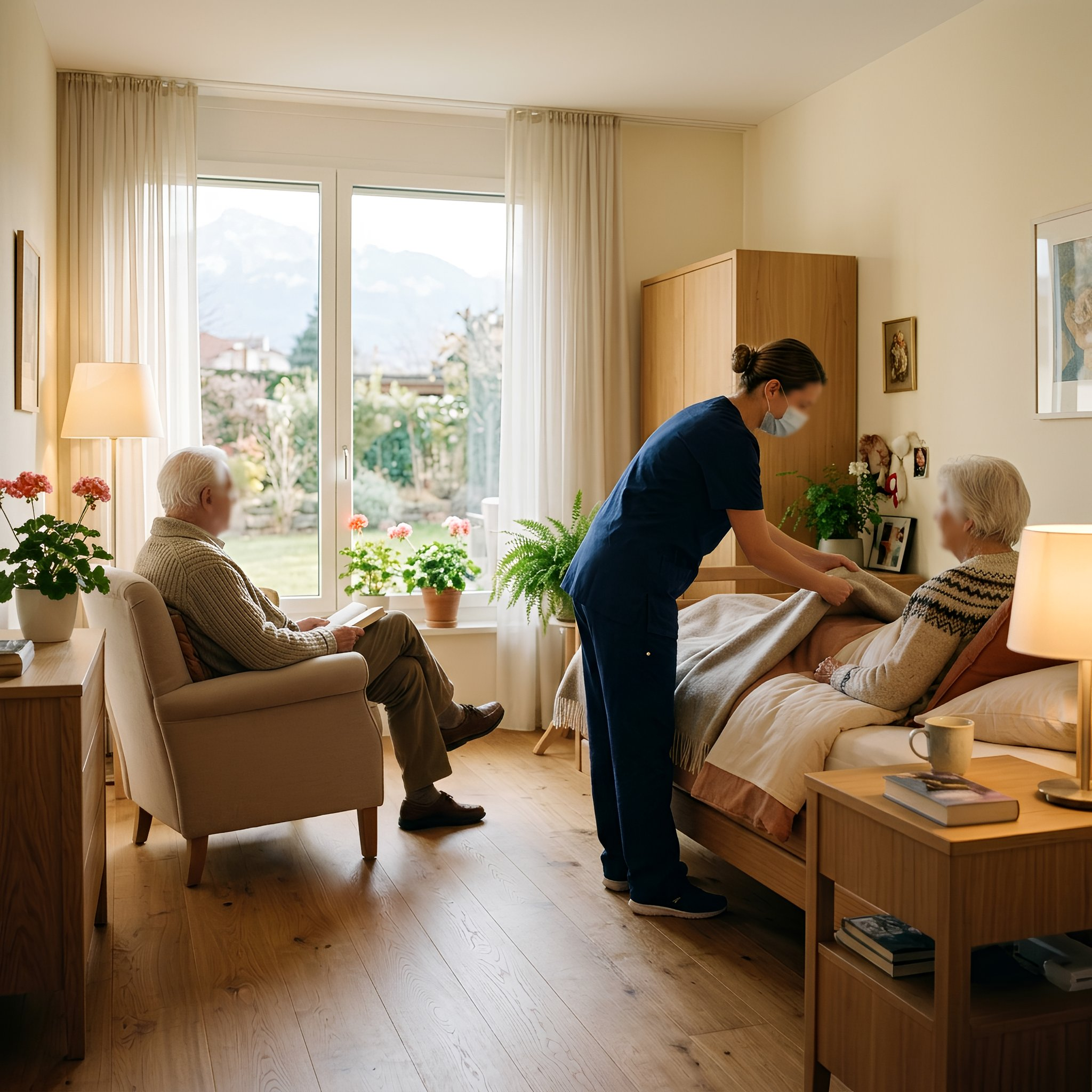
Cameras — anonymous activity, on the edge.
Each camera unit contains an NVIDIA Jetson edge device. Video is processed inside the unit, in real time. The camera produces a stream of activity events — a resident has stood up, a resident has lain down, a resident has not moved for a defined interval — and those events are transmitted to the central system.
Residents are recognised by movement signature, not by face. The system has no facial-recognition capability, no biometric template storage, no identity model trained on residents. Each resident is referred to in the data by a numeric ID. The mapping between numeric ID and the person it refers to lives only on a sheet of paper, in the resident's own room.
The image data the camera sees is processed and discarded — frame by frame — inside the camera. It is never written to disk. It never travels off the camera unit, in any form, in any context.
| Hardware | NVIDIA Jetson Orin · custom enclosure |
| Video storage | 0 — by architecture |
| Field of view | Configured per room |
| Power | PoE+, low draw |
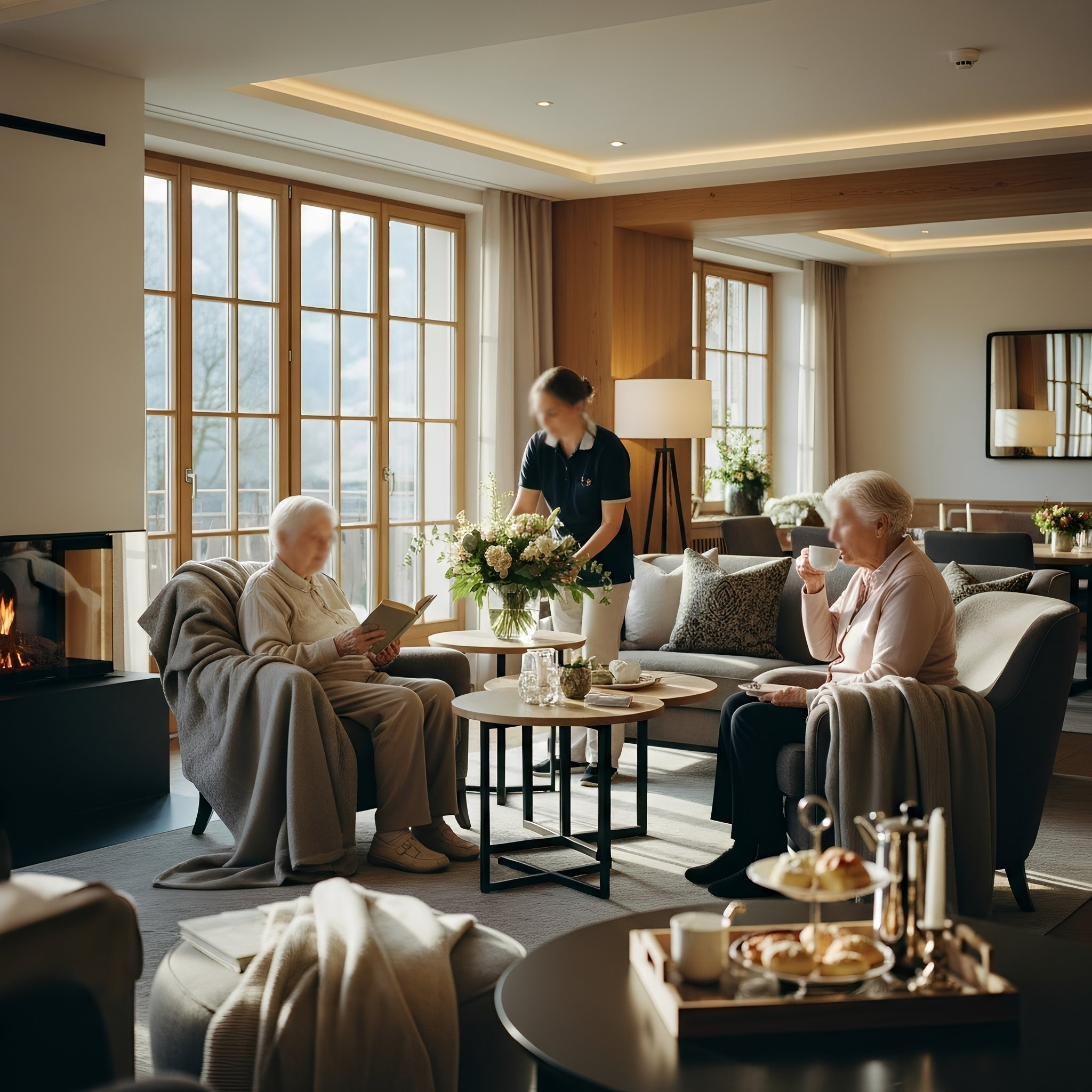
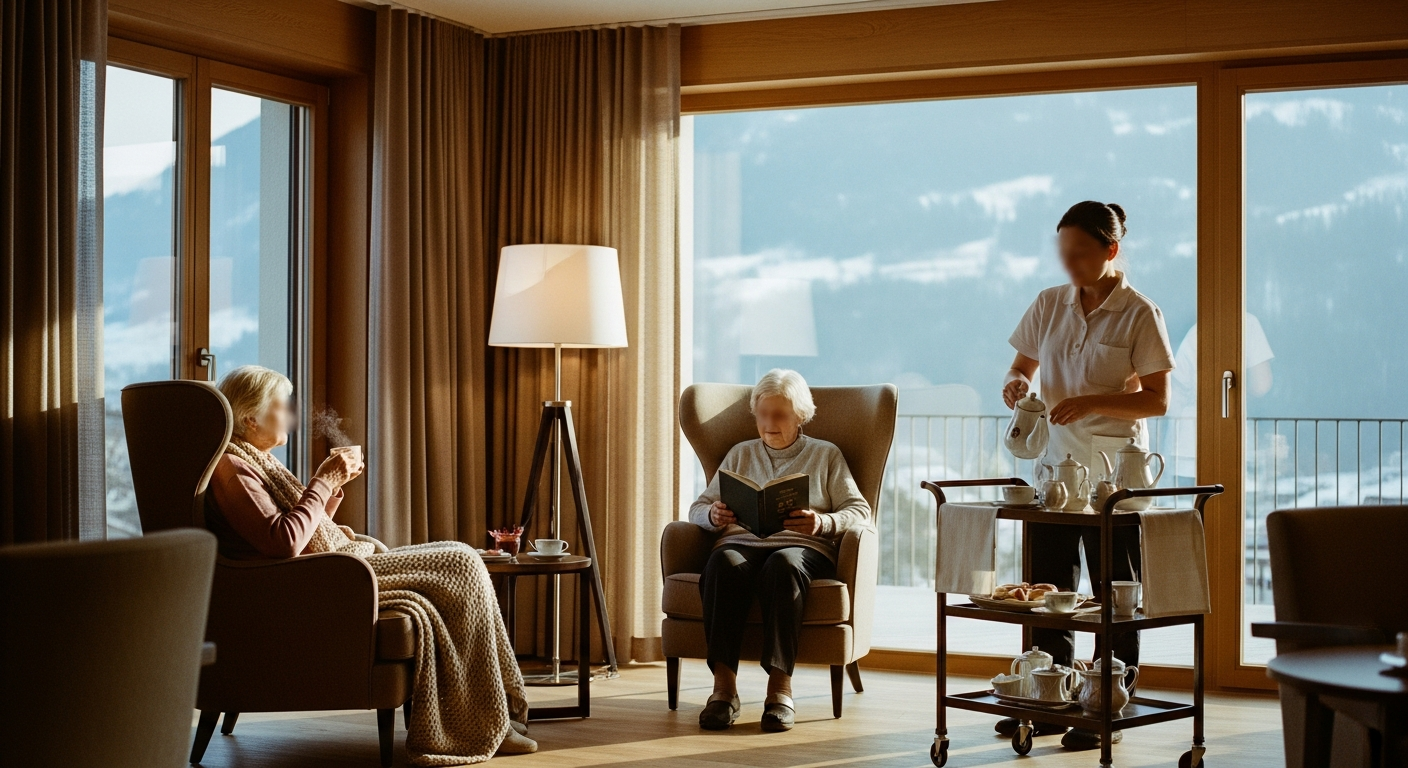
Bluetooth tags — personnel, with consent.
Caregiving staff carry a small Bluetooth Low Energy tag, typically clipped to a uniform pocket. The tag identifies the staff member to the system and broadcasts continuously. The reader is the same Jetson unit that runs the camera.
When a tagged staff member enters a room and remains there, the system records the visit: who, where, how long. This is the data that proves a round was performed, that a resident was attended to, that a shift handover happened in the room it was logged in.
Tag use is consented individually, documented in writing, and revocable. KPI and compliance reports use this data and only this data — no other source identifies personnel.
| Tag | BLE 5.0 |
| Range | Room-scoped |
| Identity | Only for staff. Consented, individual |
| Reporting | Time-with-resident, rounds, exceptions |
| Revocation | On-request, immediate |
Presence sensors — for privacy-critical zones.
Bathrooms, en-suites, and dressing areas are not camera spaces. They have a different sensor — a millimetre-wave presence sensor — that detects entering, lingering, and leaving without producing imagery of any kind.
The presence sensor enables the safety affordances camera spaces enable — fall detection, prolonged-stillness detection, escalation when a resident has not exited within an expected interval — while preserving the dignity these rooms require.
The sensor does not know who. It knows that a person is present, that the duration is unusual, that an alert may be required. The accompanying staff response is the layer that supplies identity, with consent.
| Sensor | Infrared, FCC/CE certified |
| Output | Presence + duration only |
| Imagery | None |
| Use | Bathrooms, en-suites, dressing areas |
| Resolution | Room-level, not body-level |
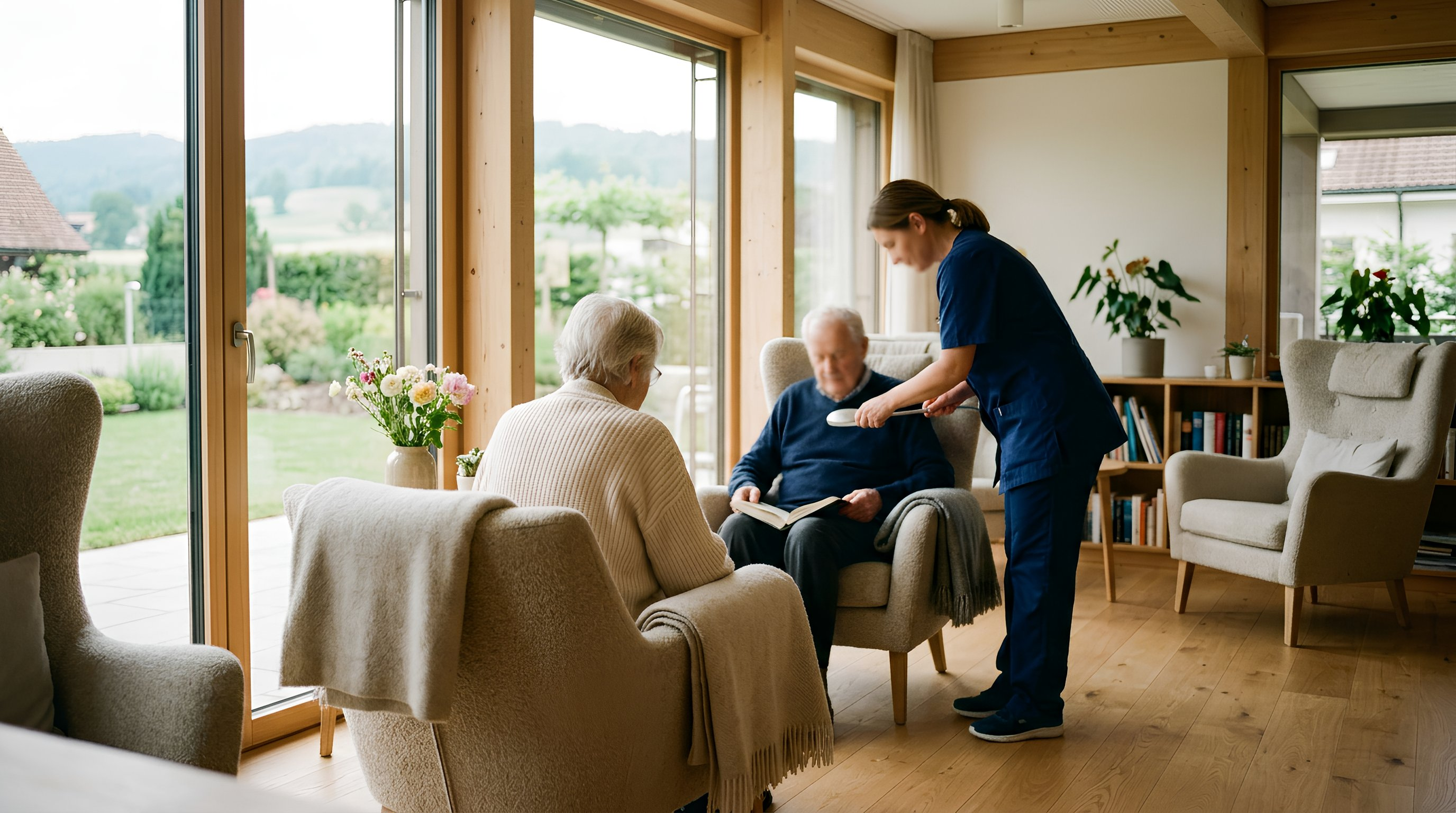
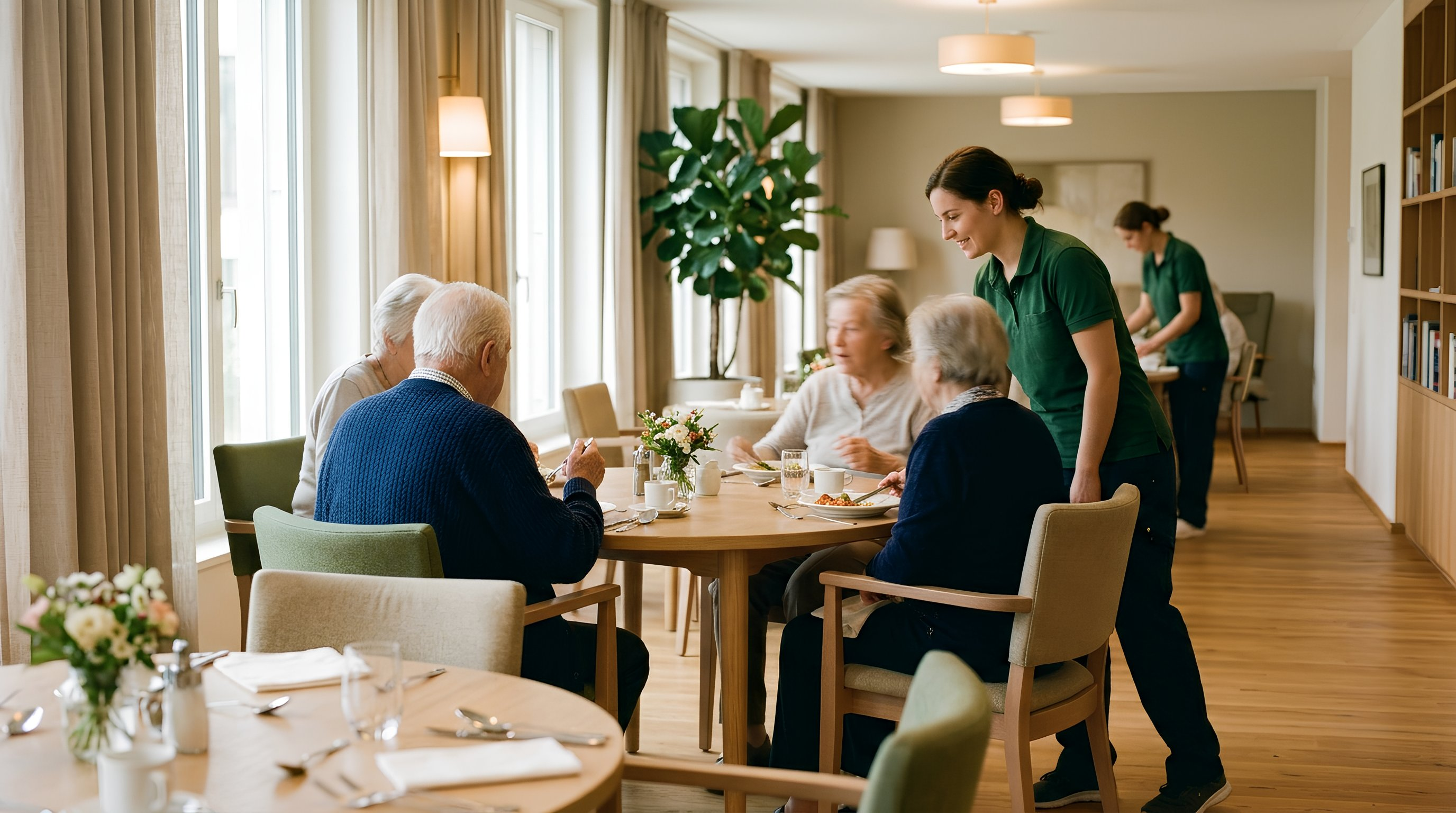
Voice copilots — encouragement, not instruction.
Each common space and each resident room may have a voice copilot — a small, microphone-and-speaker unit running a constrained model on local hardware. The copilot is proactive: it speaks first, based on visual context the camera has already abstracted into events.
The copilot is warm, slow, and unhurried. It is not an assistant in the home-product sense. It does not process the resident's voice for advertising, training, or improvement. It does its work and forgets, like every other component.
Voice is offered in the resident's first language. The first phase supports German, Swiss-German, Polish, Italian, French, English. The second phase will be defined by where the system is deployed.
| Hardware | On-prem inference, no cloud connectivity |
| Languages | DE · CH-DE · PL · IT · FR · EN |
| Wake mode | Proactive (vision-cued) and addressed |
| Retention | None — same architecture as cameras |
| Voice | Considered, slow, regionally appropriate |
Central system — on-premise, activity-only.
Everything joins on a server in the facility's own server room. The server runs the dashboard for staff, the compliance views for management, the alert routing, the on-prem voice models. It does not require an internet connection to operate — only to update.
The server stores activity records, KPIs, alert histories, audit trails. It does not store imagery, ever. It does not store any resident-identifying personal data, ever. The data the central system holds is the operator's, on the operator's hardware, in the operator's building.
When a facility chooses to leave SeniorVision, the server is powered down and removed. There is no extraction, no migration of resident data, no copy elsewhere — because the imagery never existed, and the personal mapping was always on paper.
| Location | Secure facility server room |
| Connectivity | Operates offline |
| Stored data | Activity records, KPIs, audit trail |
| Imagery | 0 frames, by architecture |
| PII | None — paper mapping only |
A conversation, not a demo.
The right way to evaluate SeniorVision is to talk to us. Write with a question, a constraint, a deployment context. We will reply within two working days.