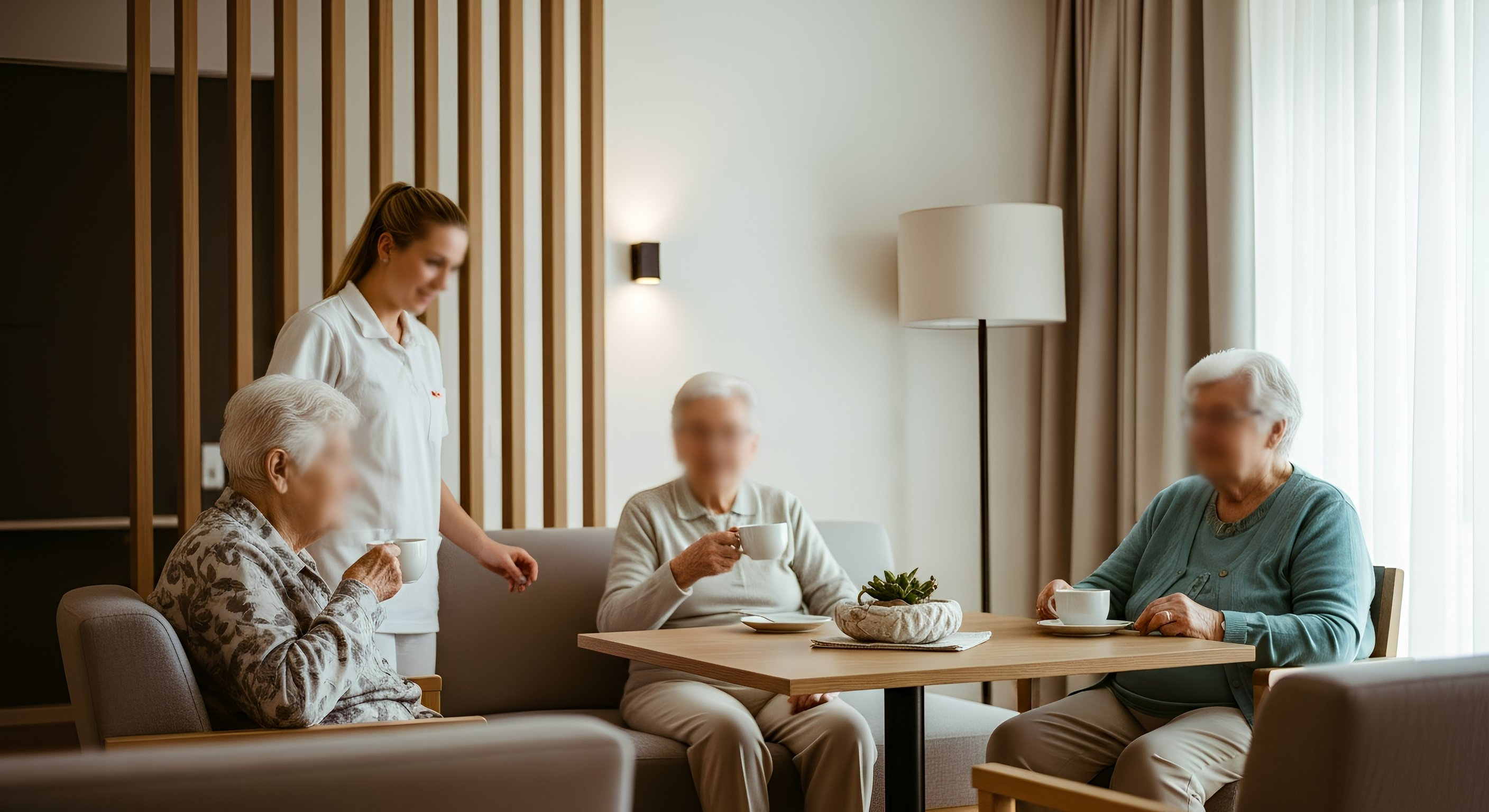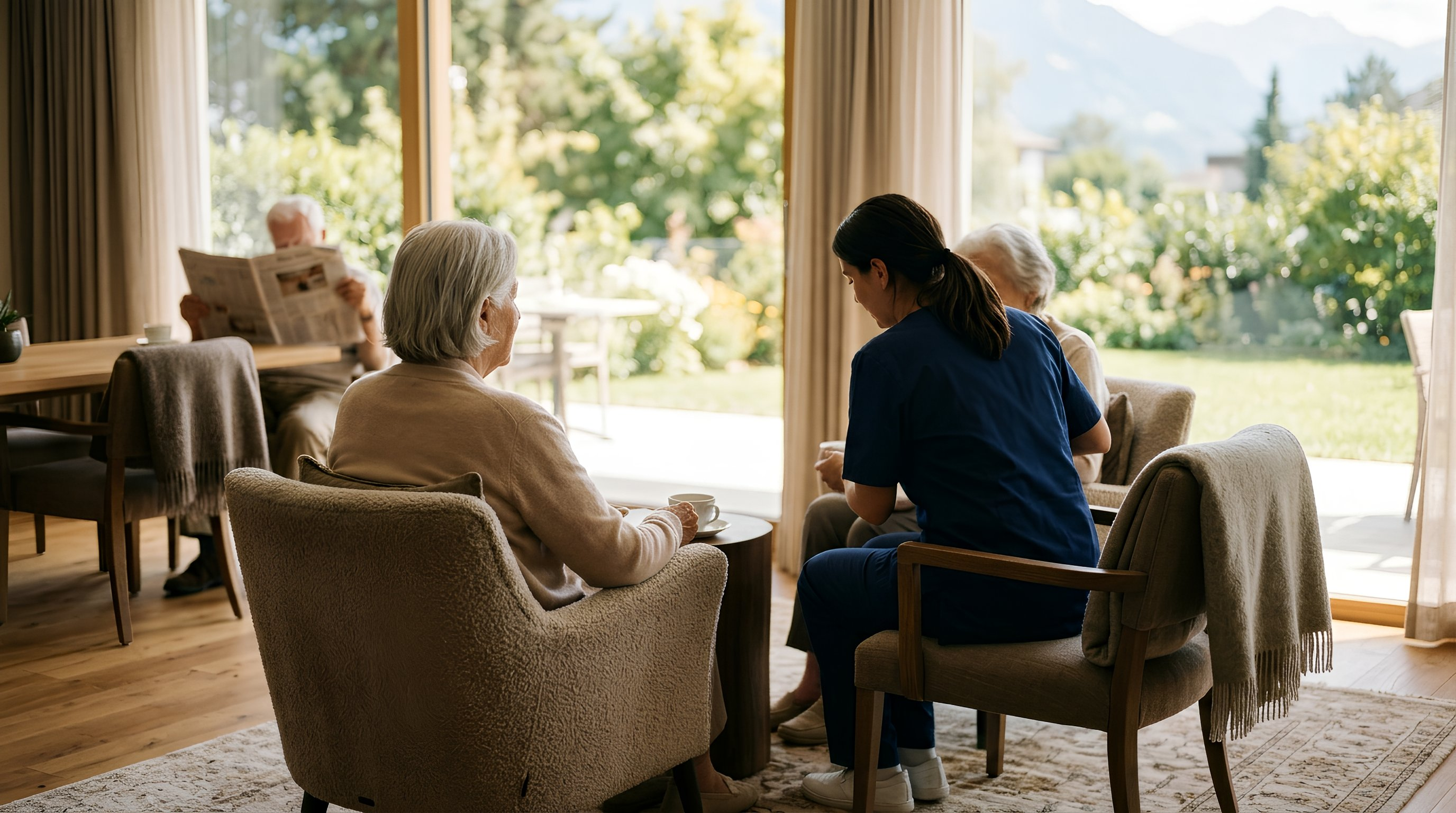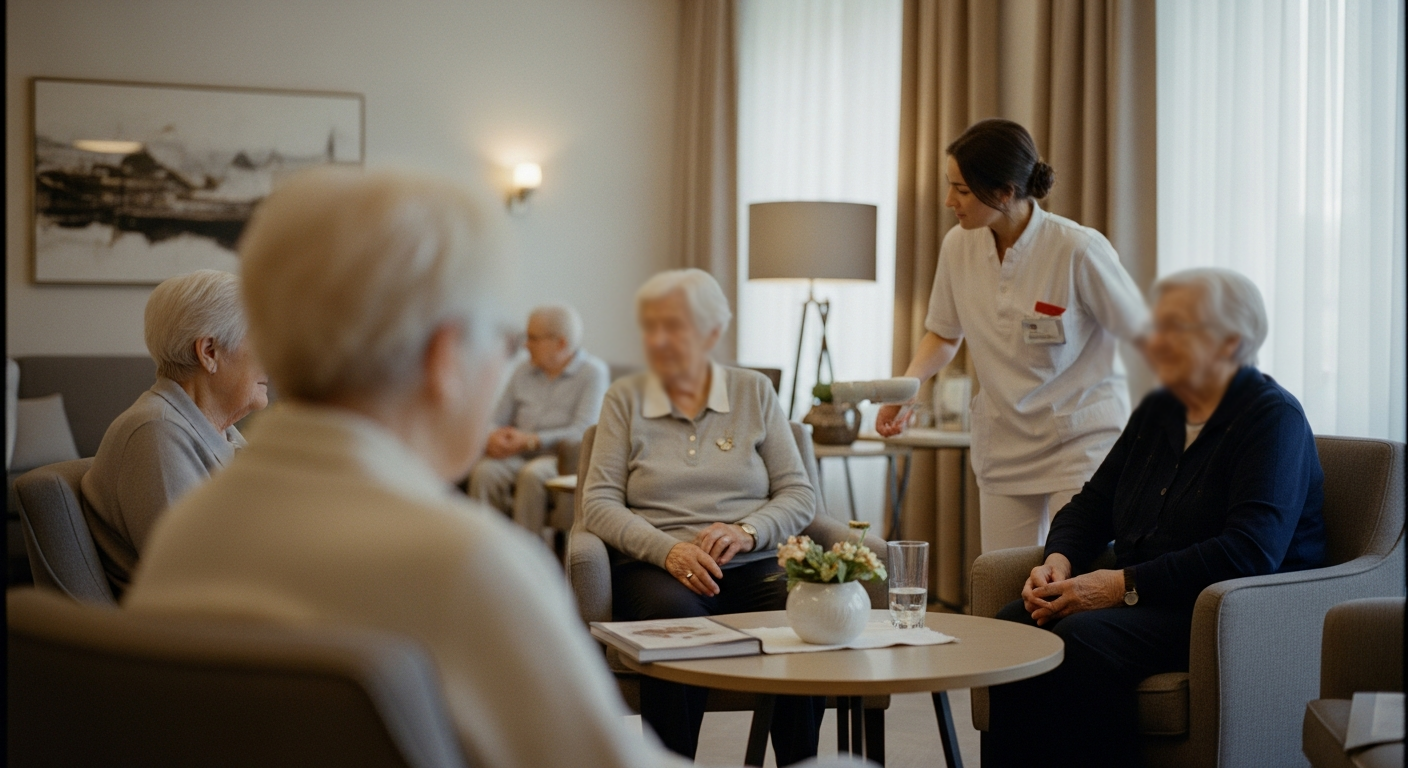
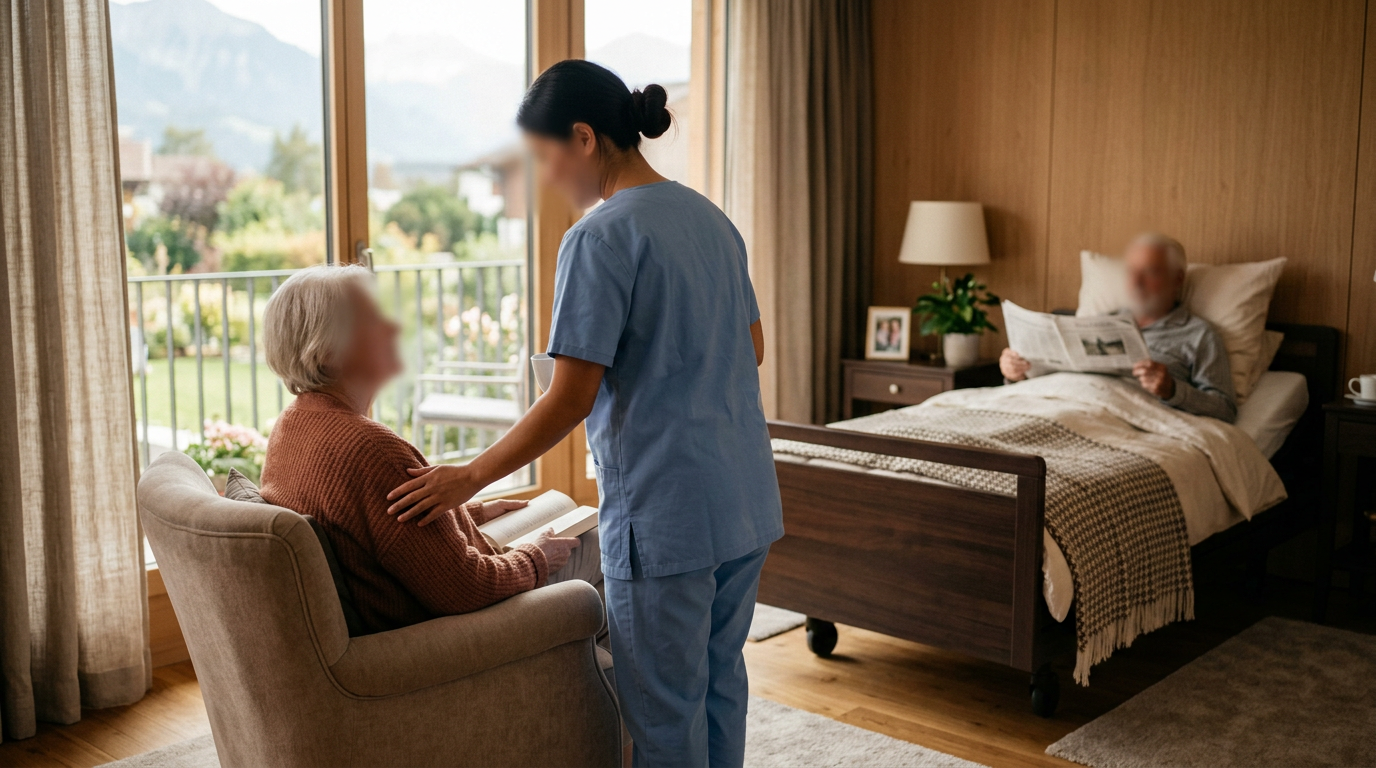
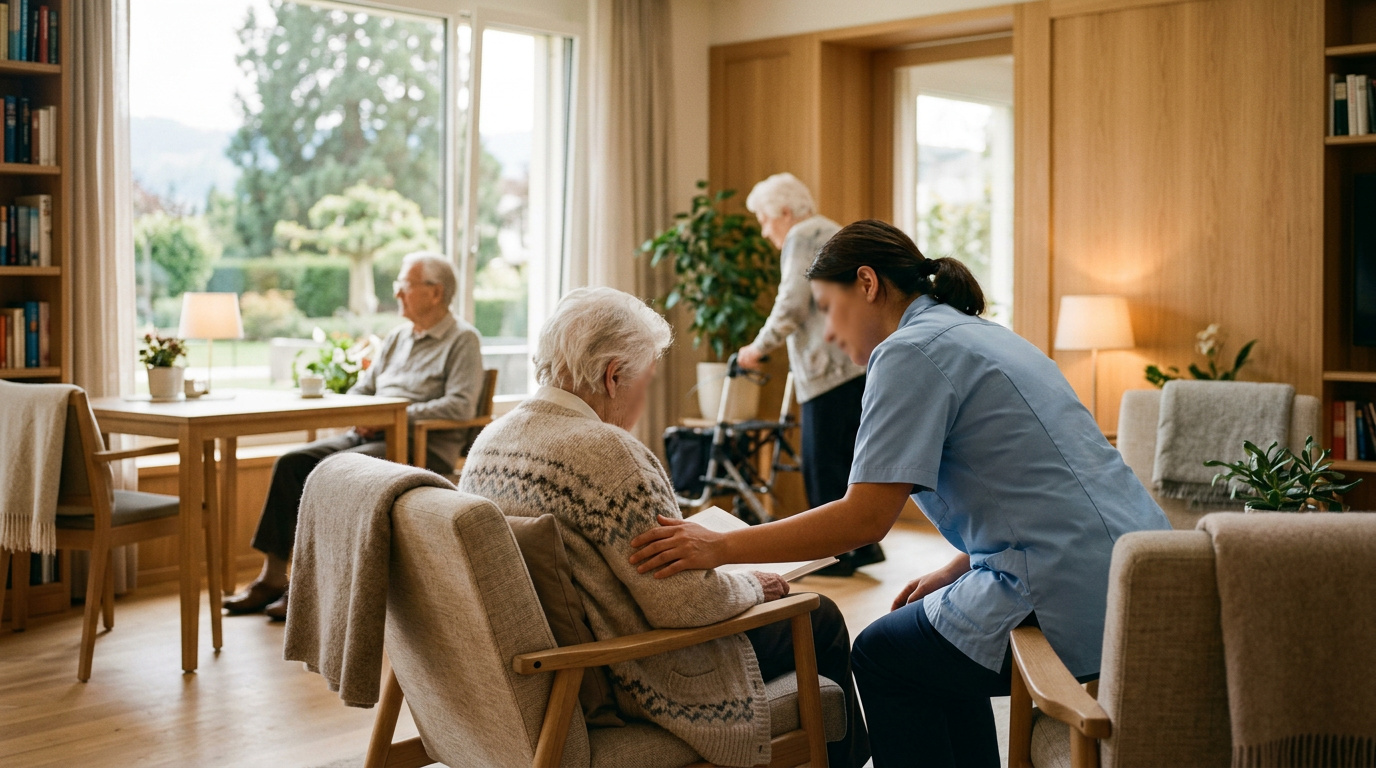
Every resident, every room, all night.
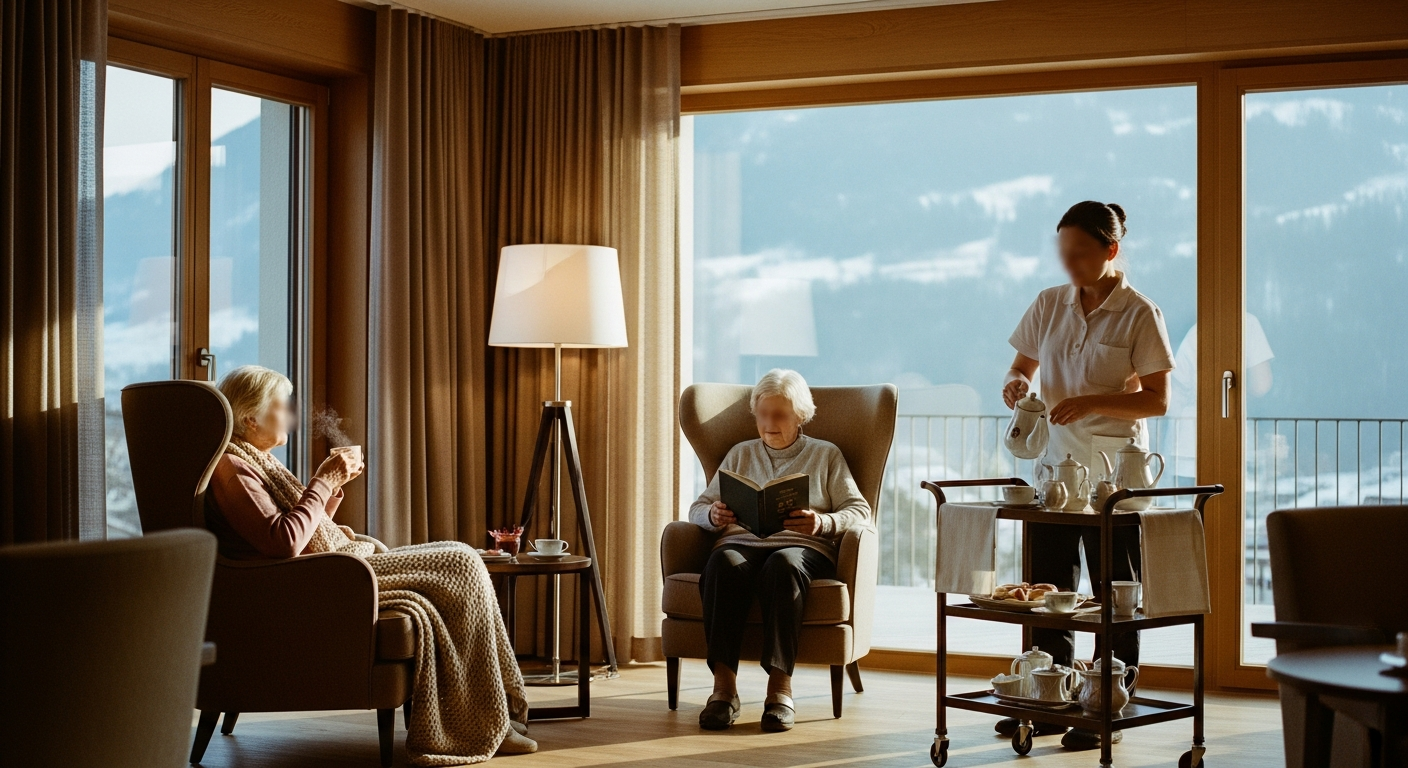
Quiet, always-on awareness across communal areas and resident rooms. Falls, lingering, and unusual stillness are noticed the moment they happen — and the right caregiver hears about it on the right device.
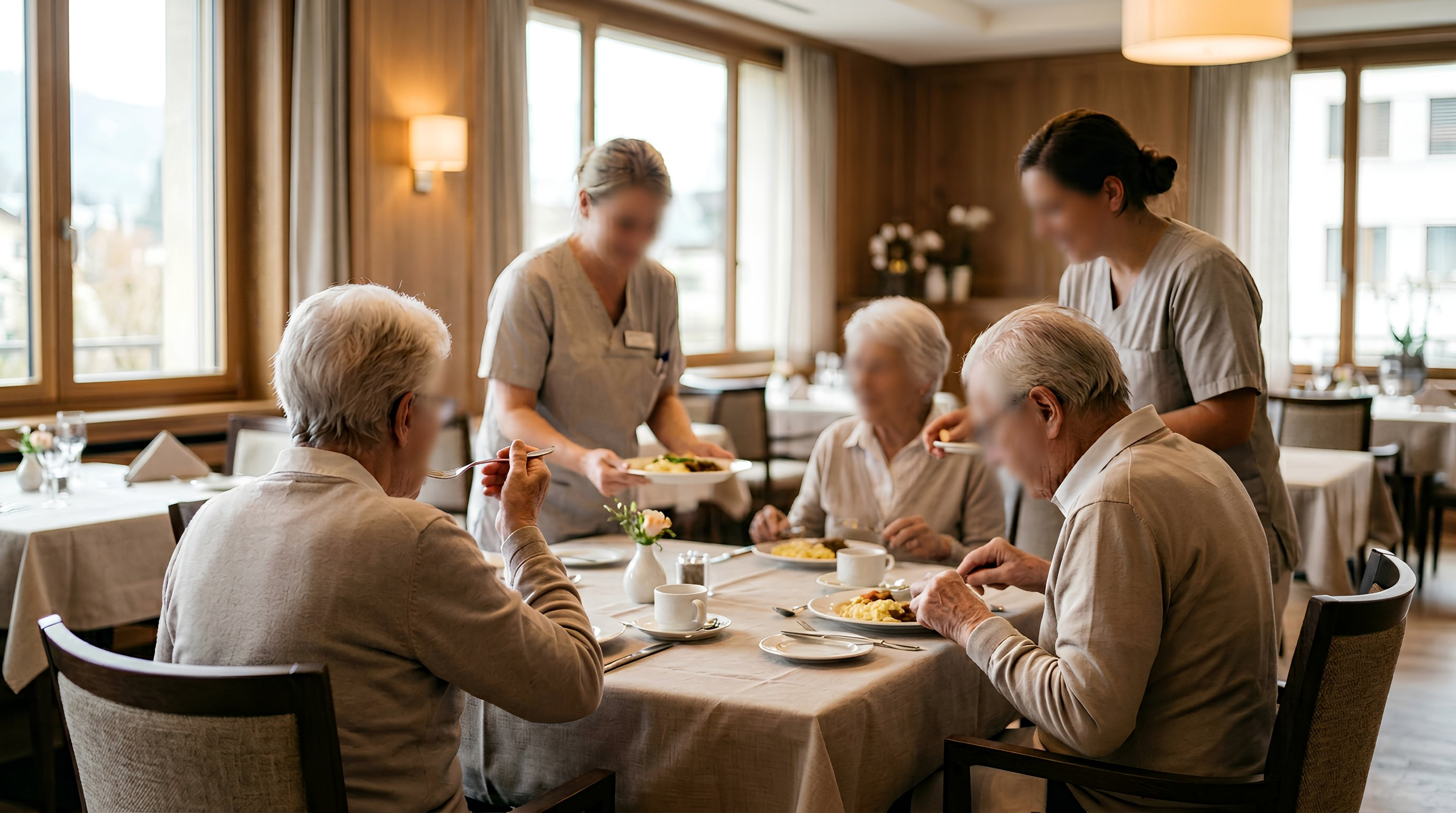
SeniorVision watches over the people in your care without recording them. It notices a fall the moment it happens, confirms each round as it is walked, and gives families the confidence that someone is always paying attention.
Residents are anonymous to the system. Imagery is never stored — only the record of care that took place.
Quiet, always-on awareness across communal areas and resident rooms. Falls, lingering, and unusual stillness are noticed the moment they happen — and the right caregiver hears about it on the right device.
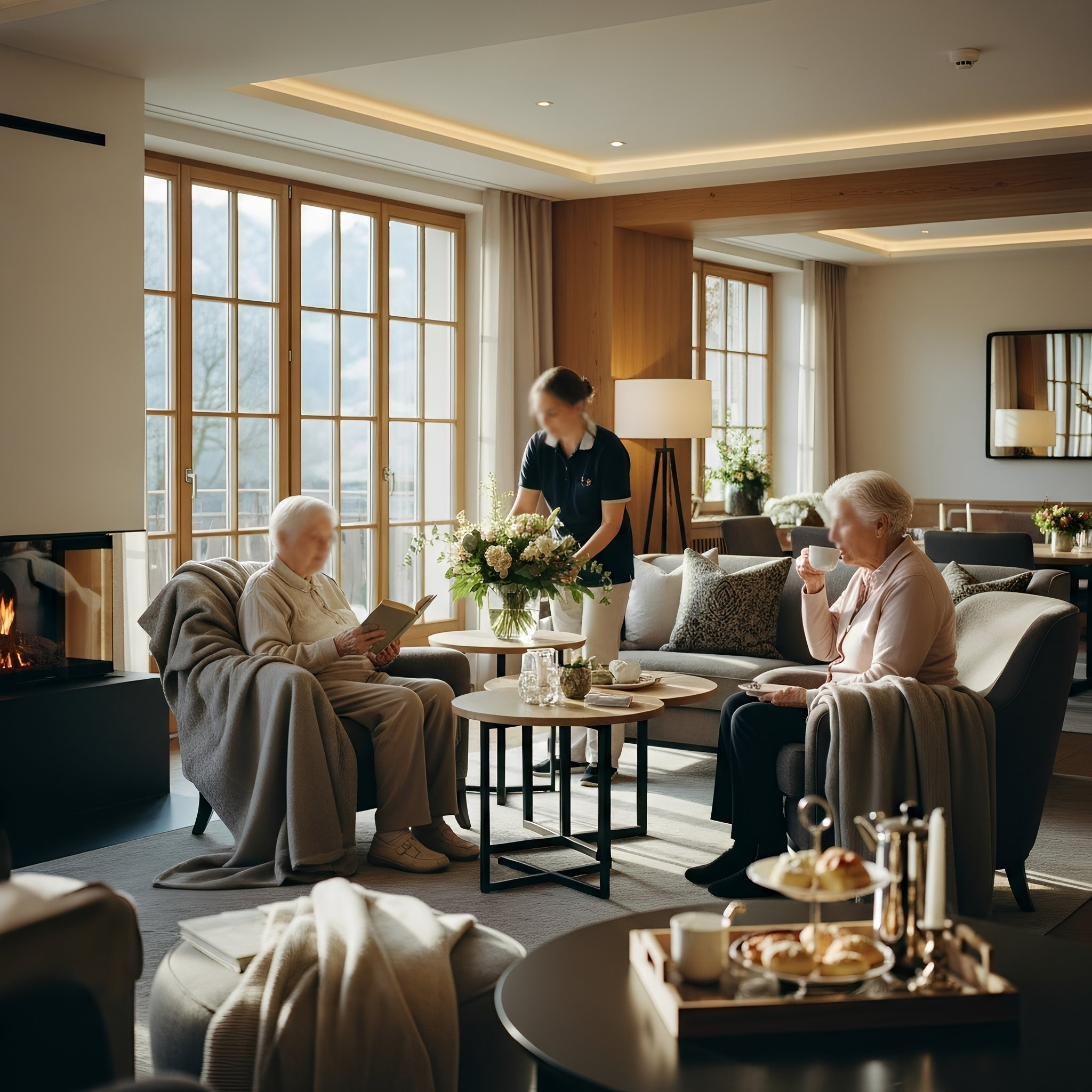
Staff presence and time-with-resident are recorded automatically as rounds happen — no checkmarks, no end-of-shift paperwork. What you read on the dashboard is what actually took place on the floor.
A gentle in-room voice notices a long stretch in the chair, an untouched tray, a missed call from family — and offers, in the resident's own language, at the resident's own pace.
Care staff spend a substantial share of every shift on routine just-in-case rounds. SeniorVision replaces these with event-driven response, freeing roughly 5% of caregiver time across the roster. Recovered hours are reallocated to direct care – and the value compounds across every shift, every day, and scales with facility size.
Falls are the single most expensive preventable incident category in elderly care. Continuous attention reduces both their frequency and severity, producing the most rigorously documented economic argument in the category.
Removing exhausting night rounds lowers burnout, which lowers turnover. European care turnover runs 25–40% per year; even a 5-point reduction produces measurable savings in recruitment, training, and productivity-gap costs. Recovered capacity also reduces reliance on agency staff, who cost 1.7–2.2× in-house rates on average – and up to 2.5–3× for premium shifts.
Objective, time-stamped records of staff rounds and resident events turn regulator audits and family-claim investigations from multi-hour reconstructions into minutes of dashboard review – reducing both administrative load and litigation exposure.
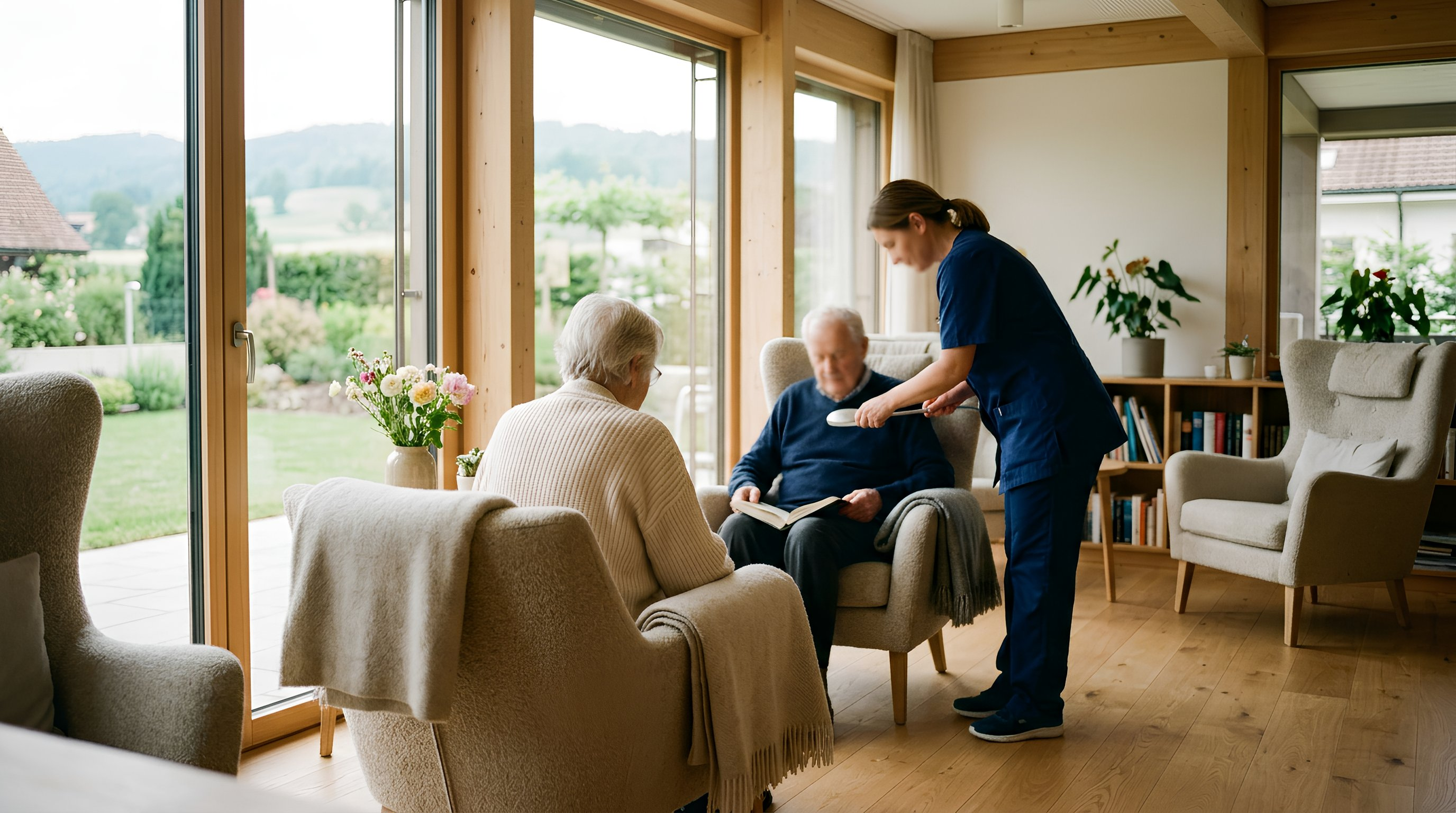
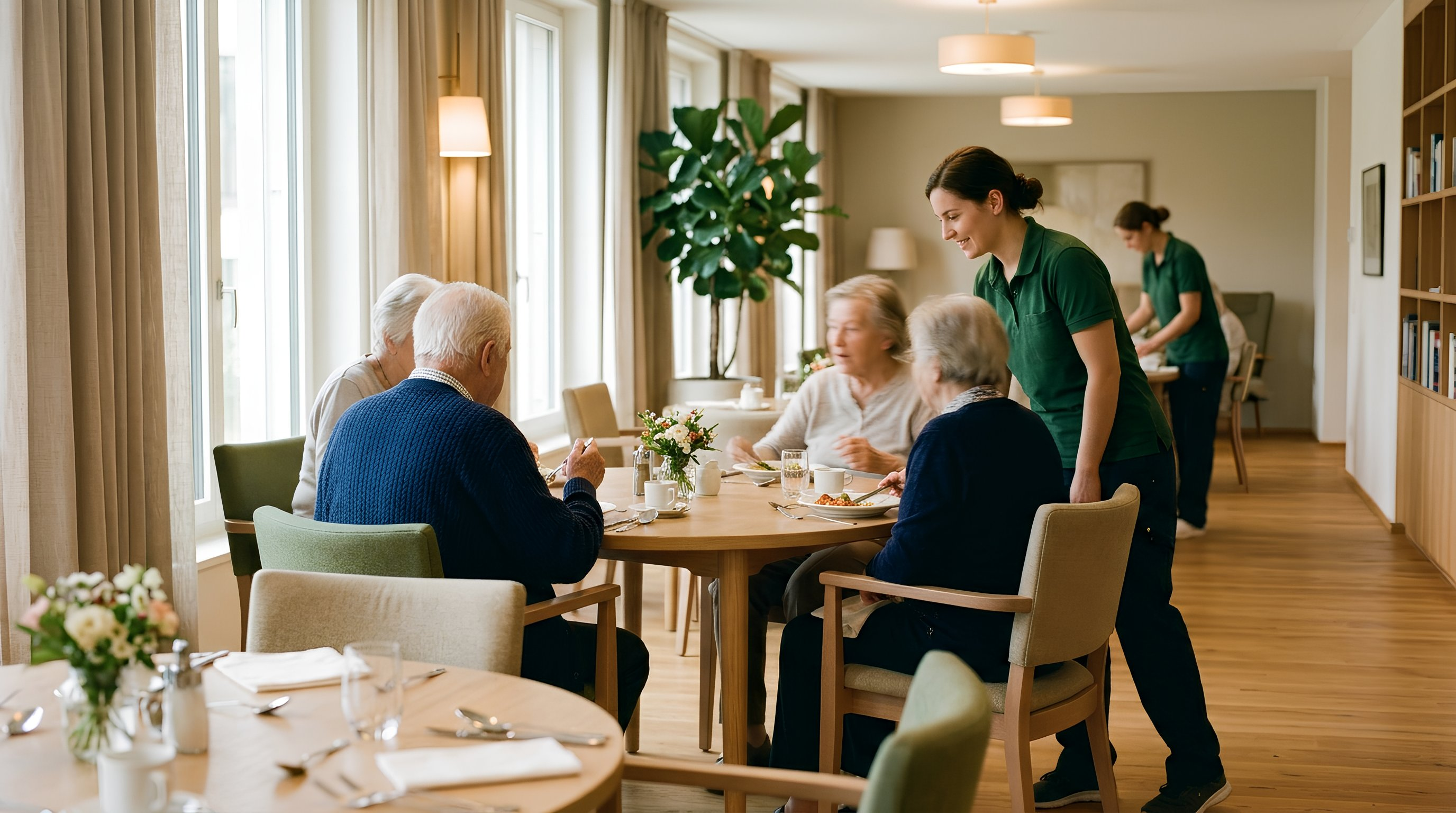
Recovered hours are spent with residents, not empty corridors: longer conversations, slower meal assistance, more attention to cognitive change. Continuous attention also surfaces pattern shifts – increasing nighttime restlessness, a slowing gait, more frequent bathroom visits – before the human eye would catch them, enabling earlier intervention.
Combined directly-attributable savings cover the operating subscription with substantial margin; hardware amortises over the standard 3–5 year horizon. Full GDPR alignment by architecture – no video retention, no facial recognition – means no ongoing compliance overhead added on top.
The economic case stands on its own. The privacy architecture is what makes it defensible.
Anonymous activity, in the room.
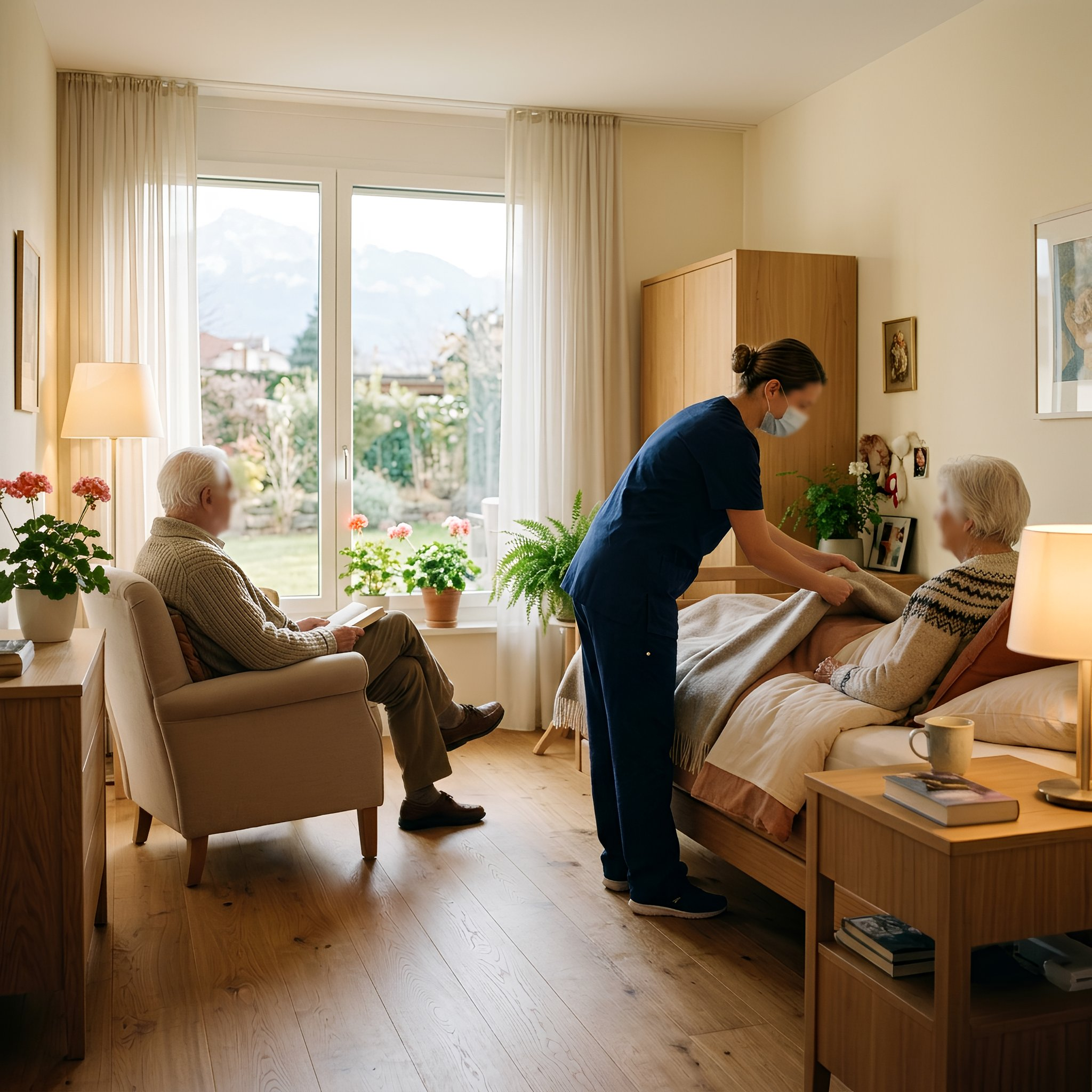
Cameras observe communal areas and resident rooms. Residents are recognised by movement signature only — never by face — and identified to the system by numeric ID. Identity mapping lives on a single sheet of paper, in the resident's own room.
Personnel, with consent.
Caregiving staff carry a small Bluetooth tag that confirms their presence in a room and their time with each resident. Tag identity is consented and withdrawable. This is the data that proves the round.
For privacy-critical zones.
Bathrooms and other intimate spaces use millimetre-wave presence sensors — not cameras. The system knows that someone has entered, lingered, or left. It does not know who, and it does not see how.
Encouragement, not instruction.
A proactive voice assistant prompts and responds to residents based on context the system has already abstracted. The voice is warm, unhurried, and speaks the resident's first language — German, Swiss-German, Polish, Italian, French, or English.
On-premise. Activity-only.
Everything joins on a secure server in the facility's own server room. Activity records, KPI dashboard, compliance views, alerts — and no personal data of any resident. The facility owns its data, and operations continue if the building loses internet.
The voice assistant does not wait to be addressed. It notices that a resident has been seated for a long while and offers a stretch. It notices a tray, untouched, and asks gently. It speaks in the resident's first language, in their cadence, and stops when they stop.
"Frau Berger, möchten Sie kurz aufstehen? Es sind jetzt zwei Stunden im Sessel."
"Guete Morge. Ich gseh Sie händ Ihre Tasse no nid aaglängt. Söll ich Ihne en frische Tee bringe lah?"
"Pani Halino, syn dzwonił dziś o piętnastej. Mogę połączyć teraz, jeśli ma pani ochotę."
Confidentiality is not a setting we can change. Image data lives on the edge device for a few milliseconds, becomes activity data, then is gone.
A short reflection on the difference between a camera that sees and a system that notices – and why the second is the one elderly care should be building.
Continue readingAn engineering note on the consequences of treating image data as ephemeral by construction. The constraint is the feature.
Continue readingNight rounds carry the highest variance and the lowest documentation quality. A working description of what changes when presence is the source of truth.
Continue readingThe right way to evaluate SeniorVision is to talk to us. Write with a question, a constraint, a deployment context. We will reply within two working days.